Saturday, April 25, 2015

Week 4 | Medicine+Technology+Art |

I found this week’s lectures and readings quite fascinating because until now I had never seen the connection between medical technologies, such as the x-ray or the MRI, and art. As Victoria Vesna retrospectively notes in Medicine pt1, only years after her tedious art classes that revolved around the human anatomy did she realise that this knowledge “proved to be critical for the work that [Vesna] was doing”.
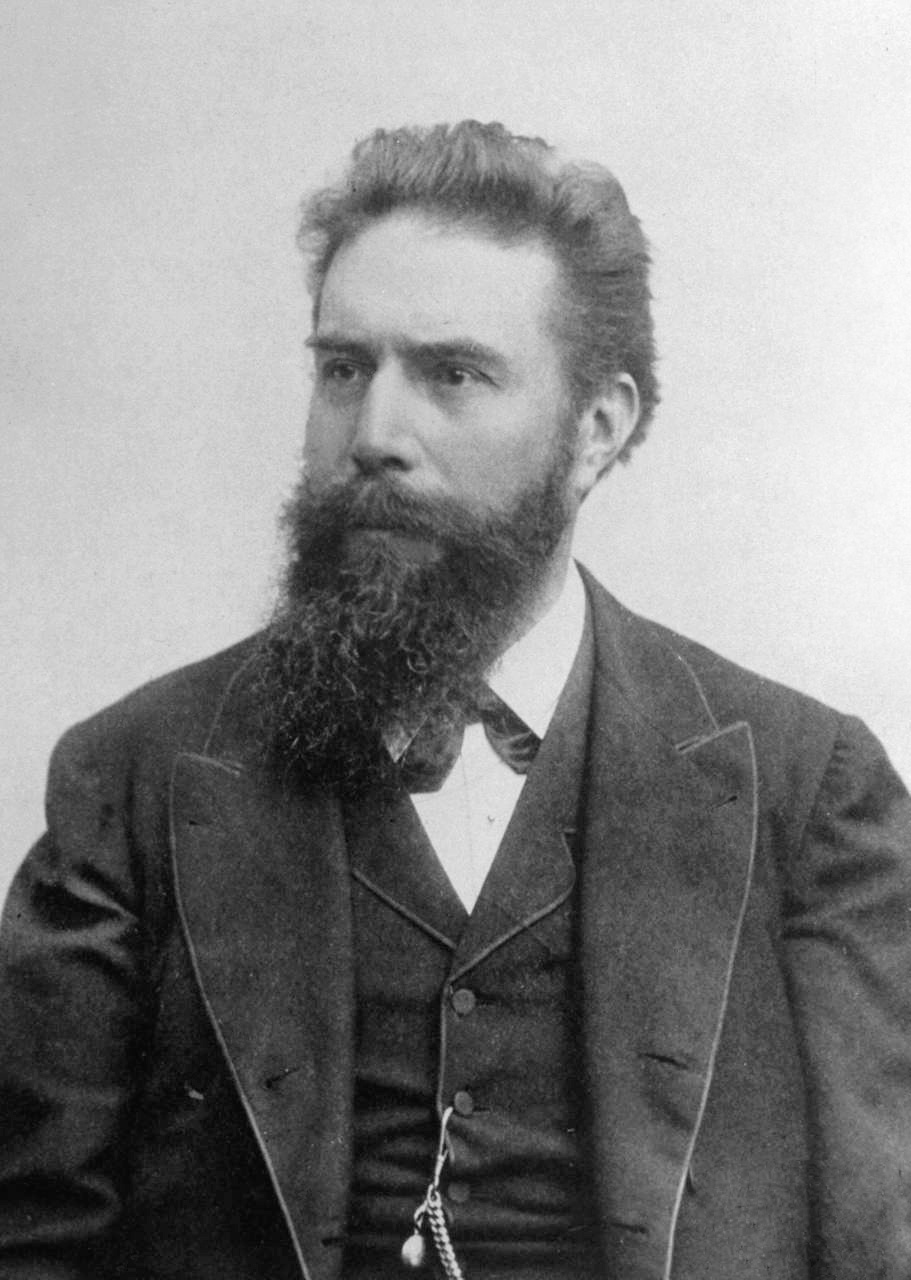
Roentgen2.jpg
Figure 1 - Photo of Wilhelm Conrad Röntgen, discoverer of the X-ray
http://en.wikipedia.org/wiki/Wilhelm_R%C3%B6ntgen#/media/File:Roentgen2.jpg

Another example of art using medical technologies and knowledge as inspiration on works on the human body is the travelling exhibition “Body Worlds”, developed and promoted by Gunther von Hagens. Its works focuses on a process known as “plastination” which “is a technique…used in anatomy to preserve bodies or body parts” developed by von Hagens in 1977 (Wikipedia). Having seen the exhibits myself, I could not help but feel conflicted between horror and fascination. Through these exhibits, I feel that the human anatomy can be somewhat dumbed-down for the general public to see and understand for educational purposes; on the Body Worlds website, Von Hagen confirms this as he hopes “for the exhibitions to be places of enlightenment and contemplation”. As I was quite young, I didn’t have much understanding or interest in these works, but now I have a much deeper admiration for von Hagens’ amazing albeit weird innovation.

Figure 2 - An example of an exhibit from Body Worlds examining the "cycle of life"
http://i.telegraph.co.uk/multimedia/archive/01014/body_worlds_pregna_1014471c.jpg

However, while medicine and technology allow artists to closely examine and understand the human body, it was in fact art that allowed medicine and technology to thrive in the first place, as we see from the beginnings of human dissections. Vesna notes that artists played a “critical role” in the first human dissections, helping doctors and researchers to document the progress and understanding of the body by visualising and recreating images of the body’s internal structure. Thus, it can be concluded that without art, not only would our understanding and knowledge of the human body be severely limited, but also hinder the progress of technological advances in medical procedures.

Figure 3 - Cover of Gray's Anatomy, extremely influential anatomy textbook written by Henry Gray


A more modern example of how art can be used to aid medicine and technology can be found in Donald Ingber’s The Architecture of Life. In his book, the way he describes the body is much like how an architect describes a building; in fact Ingber notes how “both organic and inorganic matter are made of the same building blocks” (48). His understanding and knowledge of architecture has allowed him to view the human body in ways that many could not see; Ingber’s “early scientific work led to the discovery that tensegrity architecture…is a fundamental design principle that governs how living systems are structured” according to Wikipedia.

Citations

  • Medicine Pt1. Perf. Victoria Vesna. Youtube. N.p., 21 Apr. 2012. Web. 25 Apr. 2015
  • "Plastination." Wikipedia. N.p., 13 Apr. 2015. Web. 25 Apr. 2015. <http://en.wikipedia.org/wiki/Plastination#History>.
  • "A Life in Science - Gunther Von Hagens." Body Worlds. N.p., n.d. Web. 25 Apr. 2015. <http://www.bodyworlds.com/en/gunther_von_hagens/life_in_science.html>.
  • Ingber, Donald E. The Architecture of Life. N.p.: Scientific American, 1997. PDF.
  • "Donald E. Ignber." Wikipedia. N.p., 7 Apr. 2015. Web. 25 Apr. 2015. <http://en.wikipedia.org/wiki/Donald_E._Ingber>.

Sunday, April 19, 2015

Week 3 | Robotics + Art |

Industrialization has undoubtedly been advantageous to the making of art, science, and technology but has arguably hindered the public’s understanding and appreciation of them. Industrialization was a major factor in the re-emergence of photography in the early twentieth century as photographers could more easily develop their photos using ready-made supplies. Before the nineteenth century, most art pieces could not be reproduced without great effort; however, with the introduction of lithography, drawings could be mass-produced using carvings on stone. Then, with photography, there was no longer a need to use the more laborious albeit artistic method of lithography, reducing pictorial reproduction to simply looking through a lens. In addition to that, as stated in History of Information, “there was strong demand for increased printing speed to produce more and more copies of daily newspapers”, thus resulting in even more inventions such as the steam-powered press which allowed for even easier and faster reproduction than ever. However, while Victoria Vesna compliments this “wide distribution of the printing press made possible the rapid dispersion of knowledge”, Douglas Davis laments this in his comment: “Walter Benjamin’s proclamation of doom for the aura of originality…is finally confirmed by these events” (Lecture Part 1; The Work of Art in the Age of Digital Reproduction 1). Making art was now easier; artists no longer had to sit down and paint a beautiful landscape but instead photographed and printed it out, but at the cost of its uniqueness.

Figure 1 - "New York", a photograph by street photographer Garry Winogrand; an example of just one exposure out of thousands
http://www.metmuseum.org/exhibitions/view?exhibitionId=%7b88580b02-3a38-4983-bf83-09107d4a33a4%7d&oid=645704&ft=*&fe=1


Figure 2 - "Newspaper printing press"; an example of one of the first printing presses that made reproduction so much faster and easier
http://scm.ulster.ac.uk/~B00643919/des/image2.png

With industrialization, the understanding of art became diluted in the sense that the public was presented with an outburst of artworks that no longer felt unique. While an essay known as the Oxford Photography History compliments industrialization for allowing “the extraordinary to be seen in the commonplace”, Walter Benjamin argues that only by being at the site of the landscape can one truly feel and understand the aura (Oxford Photography History). However, with the increased availability of photographs, the urge of the public to see such landscapes are satiated by simple reproductions. The understanding of art is thus diminished; as Benjamin claims “that which withers in the age of mechanical reproducibility is the aura of the work of art” (Work of Art in the Age of Reproducibility 1).


Figure 3 - “The Sphinx, the Great Pyramid and two lesser Pyramids, Ghizeh, Egypt”, a photograph by Francis Bedford; an example of an exotic place that people would be content just to see on a newspaper
http://commons.wikimedia.org/wiki/File:Francis_Bedford_-_The_Sphinx,_the_Great_Pyramid_and_two_lesser_Pyramids,_Ghizeh,_Egypt_-_Google_Art_Project.jpg

Citations

  • Norman, Jeremy. "From Gutenberg’s Movable Type to the Digital Book, and Other Studies in the History of Media." History of Information. N.p., 6 Aug. 2011. Web. 18 Apr. 2015.
  • Vesna, Victoria. “Lecture Part 1.” Web. <https://www.youtube.com/watch?v=cRw9_v6w0ew>
  • Davis, Douglas. The Work of Art in the Age of Digital Reproduction. N.p.: n.p., 1995. PDF.
  • Winogrand, Garry. New York. 1950. San Francisco Museum of Modern Art, New York. The Metropolitan Museum of Art. Web. 18 Apr. 2015. 
  • Newspaper Printing Press. N.d. Pixgood.com. Web. 18 Apr. 2015.
  • "Oxford Photography History." Oxford Art Online. N.p., n.d. Web. 18 Apr. 2015. <http://www.oxfordartonline.com:80/subscriber/article/grove/art/T067117pg2>.
  • Benjamin, Walter. Work of Art in the Age of Reproducibility. N.p.: n.p., 1936. Print.
  • Bedford, Francis. The Sphinx, the Great Pyramid and Two Lesser Pyramids, Ghizeh, Egypt. 1862. Cairo. Wikimedia. Web. 19 Apr. 2015.


Sunday, April 12, 2015

Week 2 | Math + Art |

While math and art are commonly thought to be quite unrelated, they both similarly have their roots in nature as we see with the fractals, which are repeating patterns at every scale. Fractals are often thought to be solely a mathematical concept, with computer scientists using it in modern-day computing and science; however as explained in African Fractals by Ron Eglash, organic fractal designs such as tree branches and algae have been used “for centuries to design textiles, sculptures, architecture, hairstyles and more” by Africans. 

Figure 1 - "Koch Curve Loop"
http://www.collegeenvy.com/wp-content/uploads/2014/03/gif81.gif


The website reminded me of a book called Sacred Geometry by Miranda Lundy; Lundy gives insight on how matter may be organized into particular shapes (such as fractals) and explores the relationships between shapes, mathematics, music, and physics. Referring to Figure 2, Lundy explains that these patterns “form the basis for pattern construction in many traditions of sacred and decorative art across the world. They can be found underlying Celtic and Islamic patterns and in the natural world they appear as crystal and cellular structures” (Sacred Geometry 100). I feel that this ties in nicely with Eglash’s view and corroborates the idea that both art and math originate from the observation of nature. 

Figure 2 - Image from Sacred Geometry

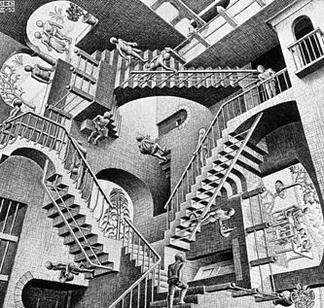
An example of an artist whose artwork is heavily influenced by mathematics is M.C. Escher. Escher, who had only received secondary school level mathematics training, created works that were recognized as “an extraordinary visualization of mathematical principles”. Escher’s arguably greatest work, Relativity, conforms to this notion as its focus is based on the manipulation of the laws of gravity and perspective.

Escher's Relativity.jpg
Figure 3 - Escher's Relativity
http://upload.wikimedia.org/wikipedia/en/a/a3/Escher%27s_Relativity.jpg

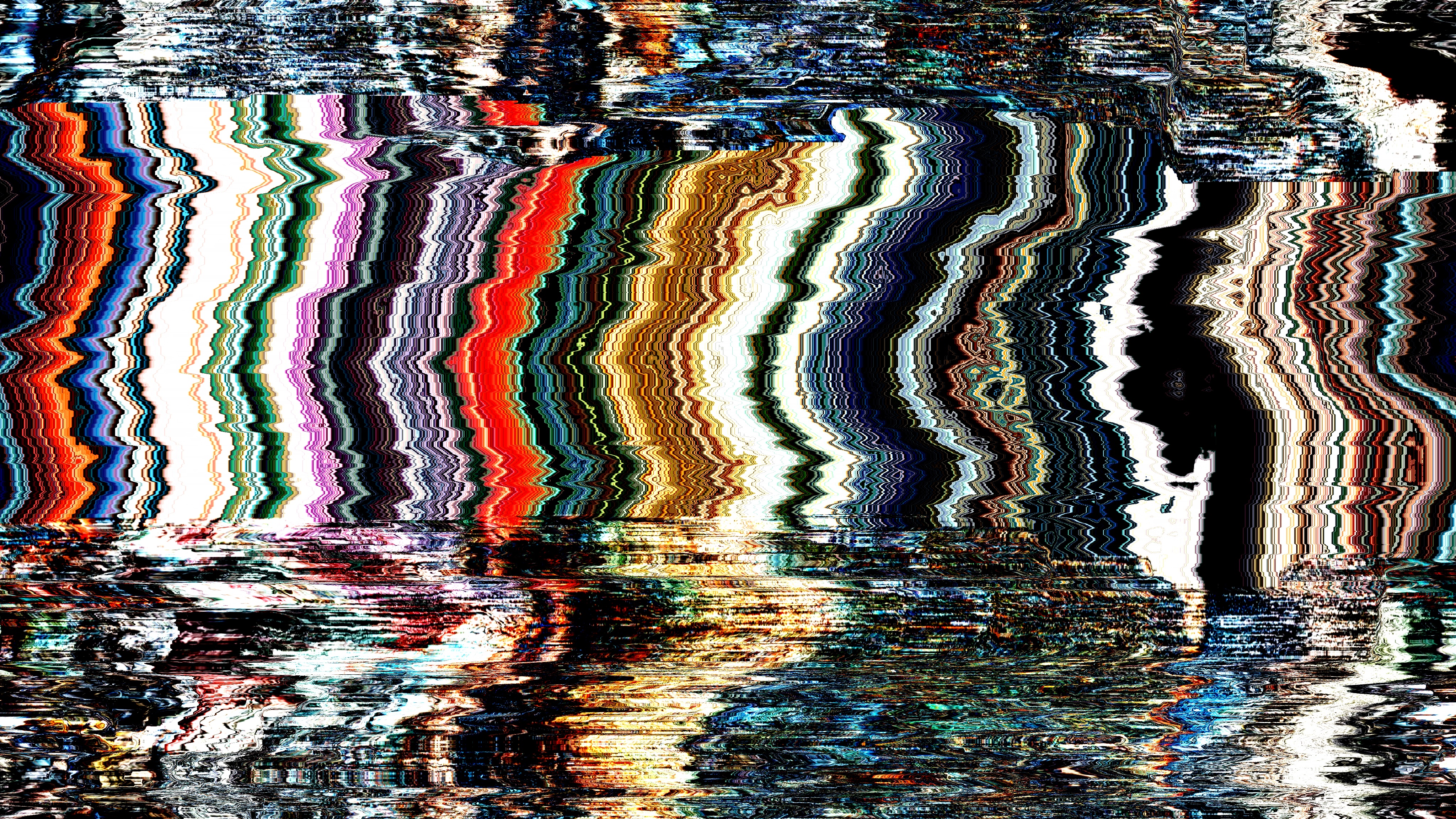
One more recent style of art that I find interesting is “glitch art”; it is a great representation of art coming together with mathematics and specifically computer science. Generally, glitch art is created by taking a digital photograph and distorting it by altering its data using text editor. An example of glitch art would be Mathieu St-Pierre’s Caffeine 4 shown below. I believe that glitches are similar to fractals in that glitches and fractals are normally associated with computer science/math, however they have in fact found their way into art and even music (glitch hop). 

Figure 4 - Caffeine 4 by St-Pierre
https://matstpierre.files.wordpress.com/2012/07/image42.jpg

From exploring entire mathematical concepts like Escher’s work to glitch art used to express great distortions or in pieces like Caffeine 4, eccentricity and energy, mathematics has woven its way within art and science and its effects are limitless. 

Citations

  • Eglash, Ron. "African Fractals." African Fractals. N.p., n.d. Web. 11 Apr. 2015.
  • Koch Curve Loop. Digital image. College Envy. N.p., Mar. 2014. Web. 11 Apr. 2015.
  • Lundy, Miranda. Sacred Geometry. New York: Walker, 2001. Print.
  • Escher, Maurits C. Relativity. Digital image. Wikimedia. N.p., 27 Sept. 2012. Web. 11 Apr. 2015.
  • St-Pierre, Mathieu. Caffeine 4. Digital image. Wordpress. N.p., 30 July 2012. Web. 12 Apr. 2015.

Saturday, April 4, 2015

Week 1 | Two Cultures |

Born and raised in Hong Kong, I am all too familiar with the concept of "Two Cultures". Being a former British colony, Hong Kong is a fusion of Western and Chinese culture; our street signs are all bilingual in Chinese and English, and our streets are dotted with the occasional age-old temple hidden amongst towering skyscrapers. 

Hong Kong Wong Tai Sin Temple
Figure 1 - Wong Tai Sin Temple in Hong Kong
http://yeinjee.com/wp-content/uploads/2011/04/travel-hong-kong-wong-tai-sin-6.jpg


Being from Hong Kong is not my only experience with “Two Cultures”; I am a Psychology major, but my biggest passion lies with arts and design. I have taken a few Design| Media Arts classes here at UCLA and so I have a good idea of the cultures of both the North Campus and South Campus classes. As Wilson states in Myths and Confusion in Thinking About Art/Science/Technology, “[artists] see the new technologies as tools that give profound new ways of doing what artists have historically done” which was very apparent in my Desma studio; not once did I ever have to sketch something by hand, everything was done on the computer through Photoshop, Illustrator, or Autodesk Maya (a 3D modelling program).

Broad Art Center
Figure 2 - Broad Art Center at UCLA
http://www.bruinwalk.com/site_media/media/uploads/img/2011/Jul/01/Broad_Art_Center.jpg


 However, Wilson also believed that “arts/humanities and science/technologies are talking different languages” which may have been true decades ago but is currently becoming a thing of the past. In my studio, some of my classmates were double majors in both Desma and something like Electrical Engineering or Computer Science. Technology was not simply a tool for them to create art; they may be able to use art in return to improve technology, something Wilson believes to be non-existent. In addition, I once worked as an intern under Baylor College of Medicine professor, Dominic Lam, who not only became the founding director of the Hong Kong Institute of Biotechnology, but was also honored as an “accomplished and influential artist” by the China Academy of Art, with his works even being displayed at the Beijing Olympics (qtd. from Wikipedia). Lam explained to me that many of his art pieces are heavily influenced by his work in ophthalmology and biotechnology, and that he thrives to combine these different aspects of his life into one. As such, I am led to believe that in modern times, the cultures of art, science, and technology are in fact, much more closely intertwined than many people think.  

Figure 3 - Man-Kit Lam, 2005
https://blogger.googleusercontent.com/img/b/R29vZ2xl/AVvXsEhnQeJbvC18R6u4qHGYHY26Pw-CzajkXfdqwn4hQVWU-nzYiRNoEzG0tiyke_jcsmuQgEaG7t1oKPqBaDTN4T_0WaTfJUCWuiiswjyOIionMUcvLFhqRkTCbR-AoOA6L98nQlTk8zW-wgR-/s1600/Man+Kit+Lam+for+web.jpg

Citations

  • YeinJee. Temple Meets Skyscrapers. 2011. Hong Kong. YeinJee's Asian Blog. Web. 3 Apr. 2015.
  • Wilson, Stephen. "Myths and Confusion in Thinking About Art/Science/Technology." N.p., n.d. Web. 3 Apr. 2015.
  • Broad Art Center. 2011. Los Angeles. Bruinwalk. Web. 3 Apr. 2015.
  • "Dominic Lam (physician)." Wikipedia. N.p., n.d. Web. 3 Apr. 2015.
  • Dcollins. "Re: Chemigram Shows for Rest of the Year, including Some You'll Have to Travel to." Weblog comment. Nonfigurativephoto.blogspot.com. N.p., 29 Sept. 2011. Web. 4 Apr. 2015.